As environmental regulations become increasingly stringent, particularly with Circular 10/2021/TT-BTNMT, investing in an automatic environmental monitoring system is no longer an option but has become a mandatory requirement for many businesses. However, practical implementation has shown that many systems encounter difficulties during acceptance and commissioning, and the issue does not always lie with the measurement equipment but rather with the selection of an unsuitable Data Logger. As the central unit responsible for data acquisition, storage, and transmission, the Data Logger plays a critical role in determining whether the monitoring system complies with applicable requirements.
Therefore, understanding the criteria for selecting a Data Logger in accordance with Circular No. 10 is an important step in helping businesses operate their systems reliably and comply with environmental regulations.
Circular No. 10/2021/TT-BTNMT Requirements for Data Loggers
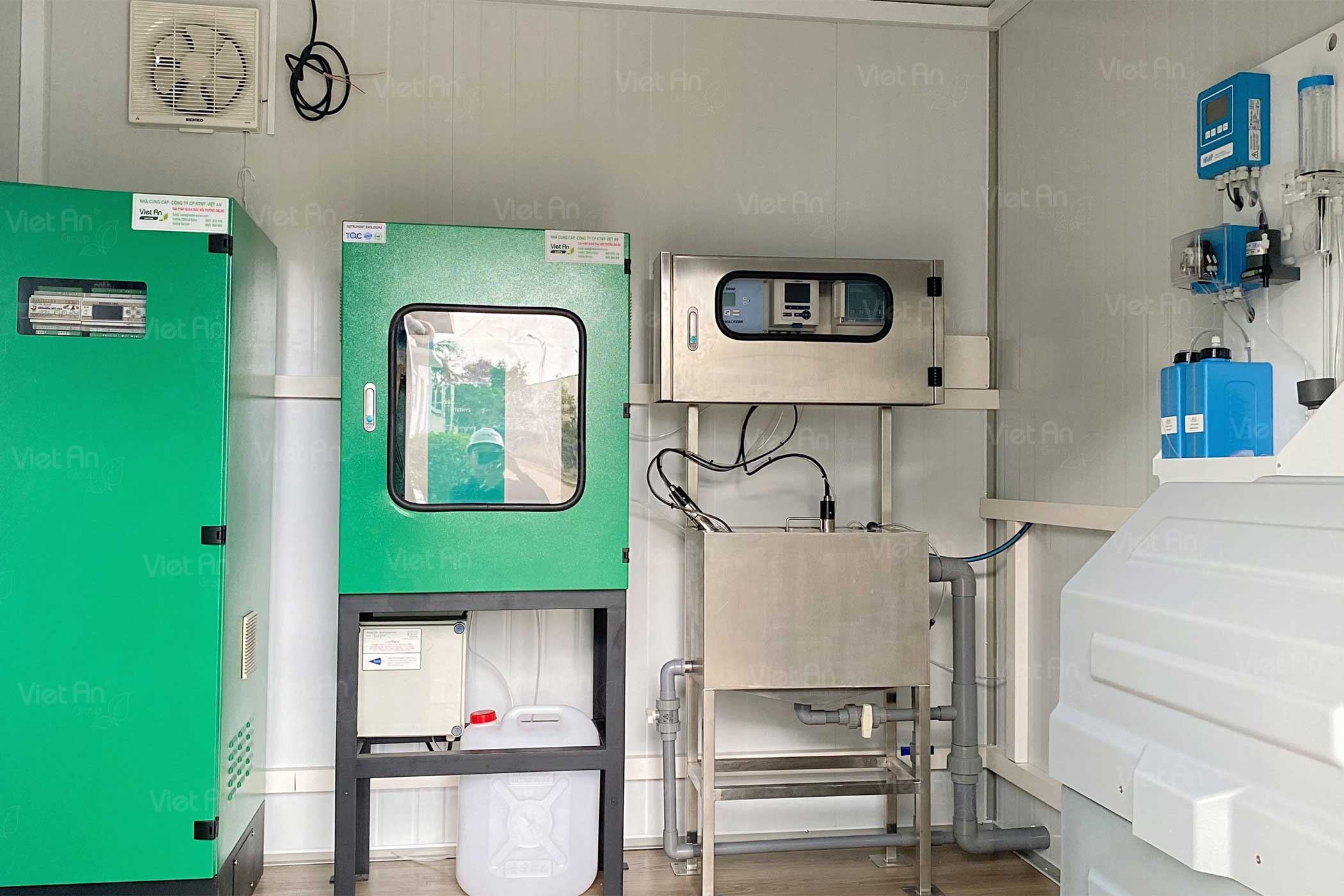
To ensure that an environmental monitoring system operates reliably and complies with the requirements of Circular No. 10/2021/TT-BTNMT, Data Logger selection should be based on clearly defined criteria, covering not only technical capabilities but also regulatory compliance. Below are five key criteria that businesses should pay particular attention to.
1. Data Transmission Capability in Compliance with Regulatory Requirements
First, one of the core requirements of an environmental monitoring system is that data must be transmitted automatically to the relevant regulatory authority in the required format and at the required frequency. This means that a Data Logger must not only provide network connectivity but also be capable of handling the data reception system and its communication requirements.s
A compliant Data Logger should provide:
- Fully automatic data transmission
- Support for common protocols such as FTP and TCP/IP
- Data export in TXT/CSV format with the required structure
- Configurable data transmission intervals, typically every 5 minutes
This is one of the most important criteria, as it directly affects the system acceptance process.
2. Data Storage Capacity and Data Continuity
The second criterion concerns data continuity. During operation, incidents such as power outages or network connection failures are difficult to avoid. However, according to the applicable requirements, monitoring data must be fully retained without data loss. A system that “measures correctly but loses data” may still fail to meet the requirements.
Therefore, a Data Logger should provide:
- Long-term data storage capacity
- A data buffering mechanism when the network connection is unavailable
- Automatic retransmission of data once the connection is restored
- Historical data storage for retrieval when required
3. Flexible Integration with Measurement Equipment
The third criterion is integration capability. An environmental monitoring station typically consists of multiple measurement devices from different manufacturers. Therefore, the Data Logger needs to function as the central connectivity unit, ensuring that the entire system operates in synchronization. Good integration capabilities make the system easier to expand and help reduce future upgrade costs.
Common requirements include:
- 4–20 mA analog signal input
- Modbus RTU (RS485) protocol support
- Modbus TCP/IP support
- Connection to multiple devices simultaneously
4. Time Synchronization and Data Accuracy
The fourth criterion is time synchronization. Every monitoring data record must be associated with an accurate measurement time. If the timestamp is incorrect, the data may be rejected or become unsuitable for verification and comparison. This is an important factor in ensuring the validity and transparency of monitoring data.
Therefore, the Data Logger should provide:
- Automatic time synchronization (NTP)
- Timestamp recording for each data record
- System event logging
5. Data Security and Integrity
Finally, environmental data now has legal and regulatory significance, making data security increasingly important.
A suitable device should provide:
- User access control
- Access and activity logging
- Data sealing
- Secure data transmission
Comparison of Circular No. 24/2017/TT-BTNMT and Circular No. 10/2021/TT-BTNMT
| STT | Criteria | TT 24/2017/TT-BTNMT | TT 10/2021/TT-BTNMT | Remarks |
|---|---|---|---|---|
| 1 | Installation plan | Direct & indirect | Direct & indirect | No change |
| 2 | Datalogger | - Storage ≥ 30 days – Truyền FTP |
- Storage ≥ 60 days – FTP / FTPS / SFTP - Data sealing |
Stricter data security & storage requirements |
| 3 | Standard solutions | ±5% (±0.1 pH) 3 concentration point |
±5% (±0.1 pH) 1 concentration point |
Simplified calibration |
| 4 | Thiết bị lấy mẫu | Điều khiển từ xa Preservation at 4±2°C |
Additional data sealing requirements | Increased control requirements |
| 5 | Camera | 2 camera, IP65, Full HD, 15fps | 2 camera RTSP Storage ≥ 3 months |
Increased storage & transmission requirements |
| 6 | UPS | ≥ 30 minutes | ≥ 30 minutes | No change |
| 7 | Risk assessment | Residual chlorine ≤ 20% | Residual chlorine ≤ 30% | Slightly relaxed |
| 8 | Internet | ≥ 3 Mb/s | ≥ 30 Mb/s | Significantly increased data transmission requirement |
| 9 | Pumps & piping | 2 pumps, 2 parallel lines | No significant change | Remains largely unchanged |
| 10 | Safety system | Fire alarm, lightning protection, equipment status | Yes | No change |
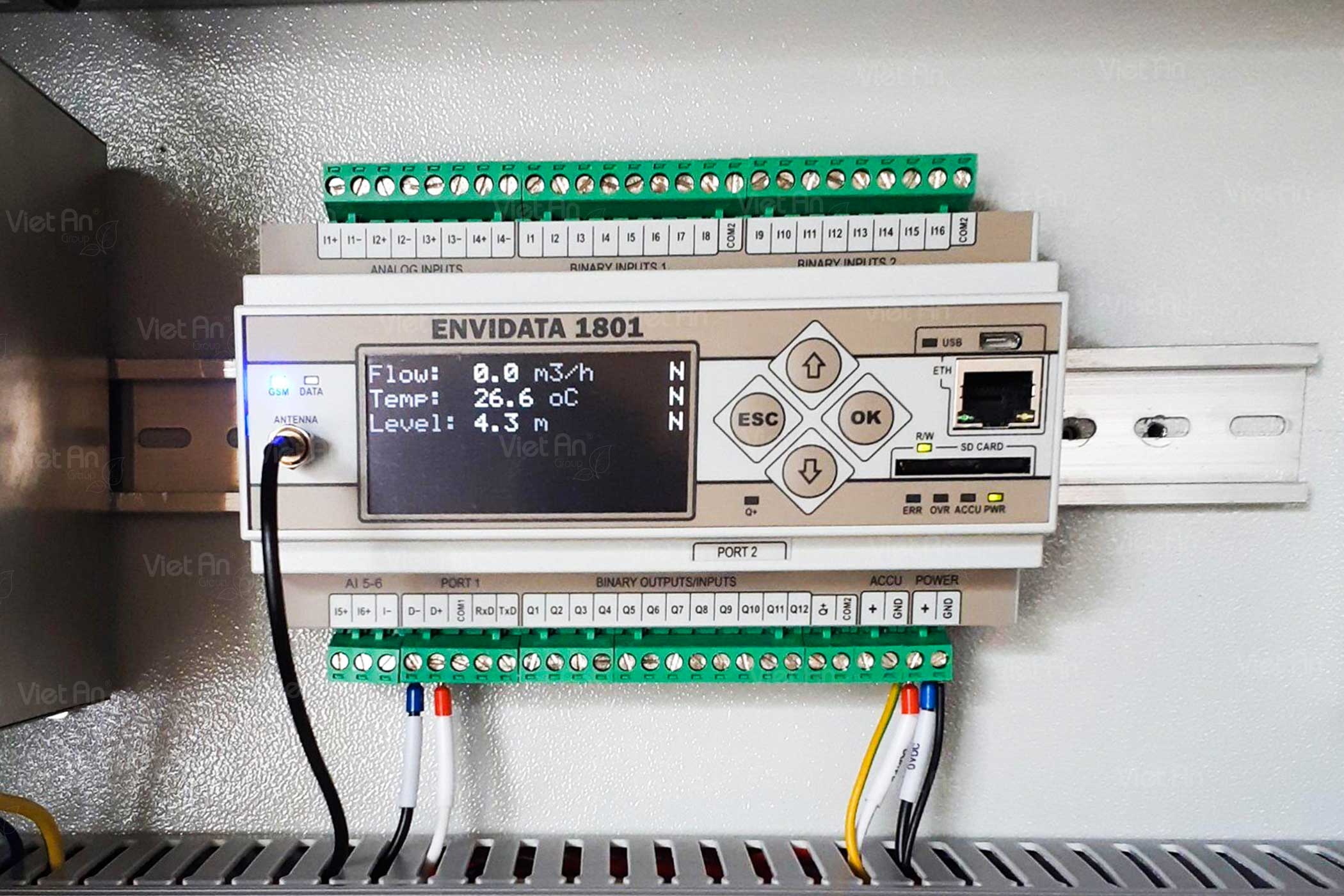
EnviData 1801 – Data Logger Fully Compliant with Circular No. 10/2021/TT-BTNMT Requirements
The five criteria above demonstrate that selecting a Data Logger is not simply about choosing a data acquisition device. It means selecting the “operational core” of the entire environmental monitoring system. In practice, not every device available on the market is designed to fully meet the specific requirements of Circular No. 10/2021/TT-BTNMT.
This is also why specialized Data Loggers such as EnviData 1801 are widely used in Vietnam.
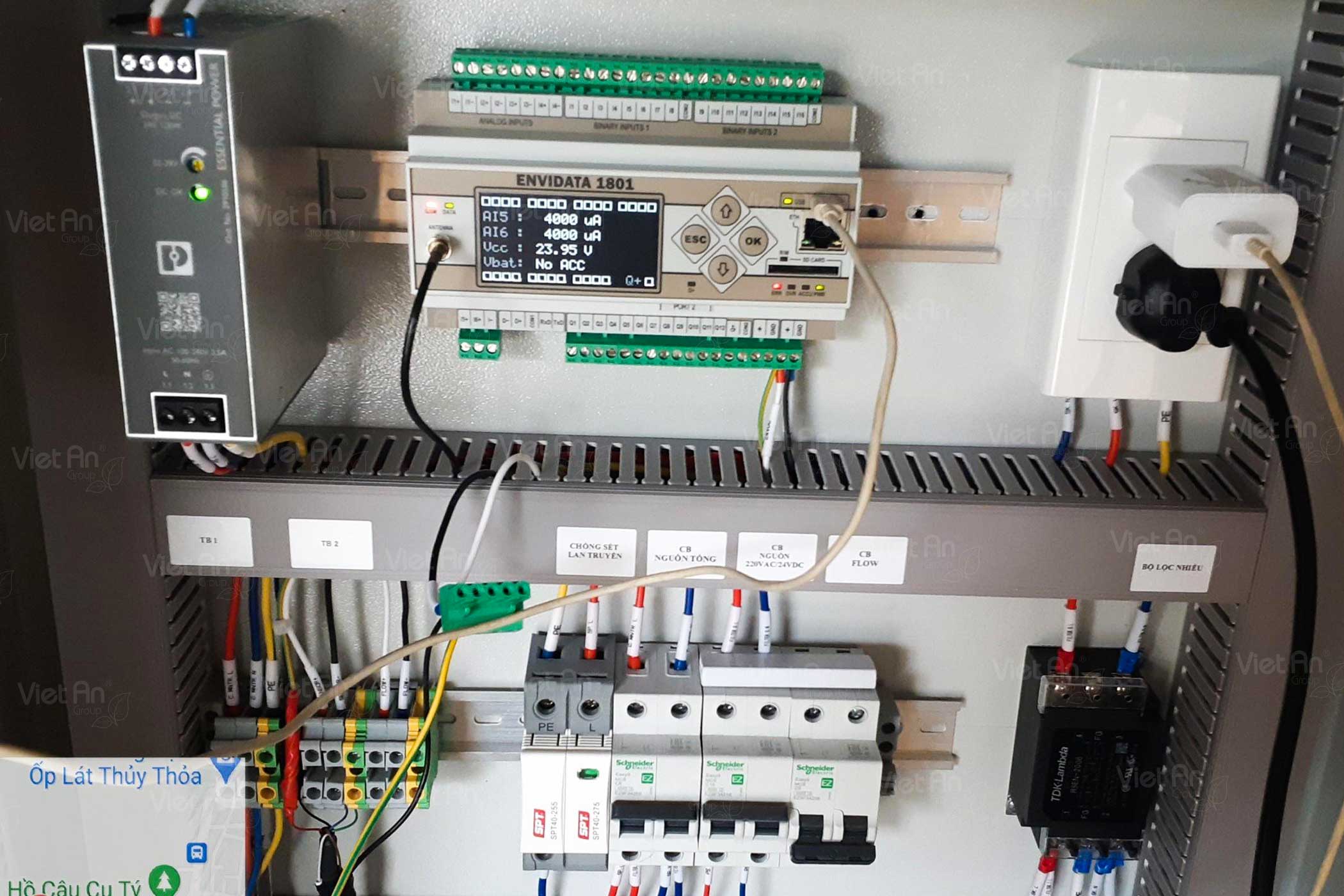
Unlike conventional PLCs or standard Data Loggers that require complex programming and customization, EnviData 1801 is designed as a “ready for TT10” solution, with the necessary functions already integrated for automatic environmental monitoring systems. This significantly shortens deployment time while supporting compliance with Circular No. 10/2021/TT-BTNMT.
From a technical perspective, EnviData 1801 demonstrates clear compatibility with the above criteria. The device supports automatic data transmission through common communication protocols and exports data in TXT/CSV file formats compatible with the required receiving structure. This makes integration with the system of the Department of Natural Resources and Environment significantly simpler than building the entire communication framework from scratch.
In terms of data storage, EnviData 1801 is equipped with internal memory and a data buffering mechanism, allowing the system to continue operating reliably even when the network connection is interrupted.
In addition, the device supports flexible connection to various sensors and analyzers through 4–20 mA analog signals and Modbus protocols. This allows EnviData 1801 to be easily integrated into existing systems or expanded in the future without requiring major changes to the overall system architecture.
Time synchronization and data accuracy are also supported through the system time synchronization mechanism. Each data record is assigned a clear timestamp, making data verification and reconciliation more transparent and reliable.
Finally, in terms of data security, EnviData 1801 supports access management and activity logging. This is becoming increasingly important as environmental data is directly connected to regulatory authorities.
If you are looking for a Data Logger solution that meets the requirements of Circular No. 10/2021/TT-BTNMT, Viet An Enviro is ready to provide consultation and a suitable solution for your environmental monitoring system. Contact us for detailed consultation on the EnviData 1801.
As environmental requirements become increasingly stringent, selecting the right Data Logger not only helps ensure stable system operation but also supports compliance with environmental regulations. With a design specifically developed for the Vietnamese market, EnviData 1801 not only meets the relevant technical criteria but also helps businesses comply with the environmental requirements of Circular No. 10/2021/TT-BTNMT while optimizing implementation costs.
——————
🌿 VIET AN ENVIRO 🌿
𝗘𝗺𝗮𝗶𝗹: sales@vietan-enviro.com
𝗛𝗼𝘁𝗹𝗶𝗻𝗲: (+84) 902 970 009
𝗪𝗲𝗯𝘀𝗶𝘁𝗲: www.vietan-enviro.com



 Vietnamese
  English