Wastewater exceeding regulatory limits is one of the issues that businesses need to pay particular attention to when operating wastewater treatment systems. When one or more parameters in treated wastewater exceed the applicable limits, businesses need to promptly identify the cause, inspect the treatment system, and implement appropriate corrective measures.
As environmental management requirements continue to receive greater attention, an automated wastewater monitoring stations plays an important role in continuously monitoring wastewater quality. The system provides businesses with data to track parameter trends, detect abnormal conditions, and proactively inspect the system when changes in wastewater quality occur.
For industrial wastewater, businesses also need to correctly identify the applicable technical regulation, as QCVN 40:2025/BTNMT was issued and came into effect on September 1, 2025. However, Circular 06/2025/TT-BTNMT provides transitional provisions for certain facilities that were already in operation or had completed environmental procedures before the new regulation took effect.
What Does It Mean When Wastewater Exceeds Regulatory Limits?
Wastewater exceeding regulatory limits refers to a situation in which the value of one or more pollutant parameters in wastewater exceeds the permissible limits specified by the applicable environmental technical regulation or requirements applicable to the facility.
However, businesses should not draw conclusions based solely on a single value displayed by the monitoring system. When an abnormal value occurs, the condition of the treatment system, flow rate, production process, sampling system, and monitoring equipment should all be considered simultaneously.
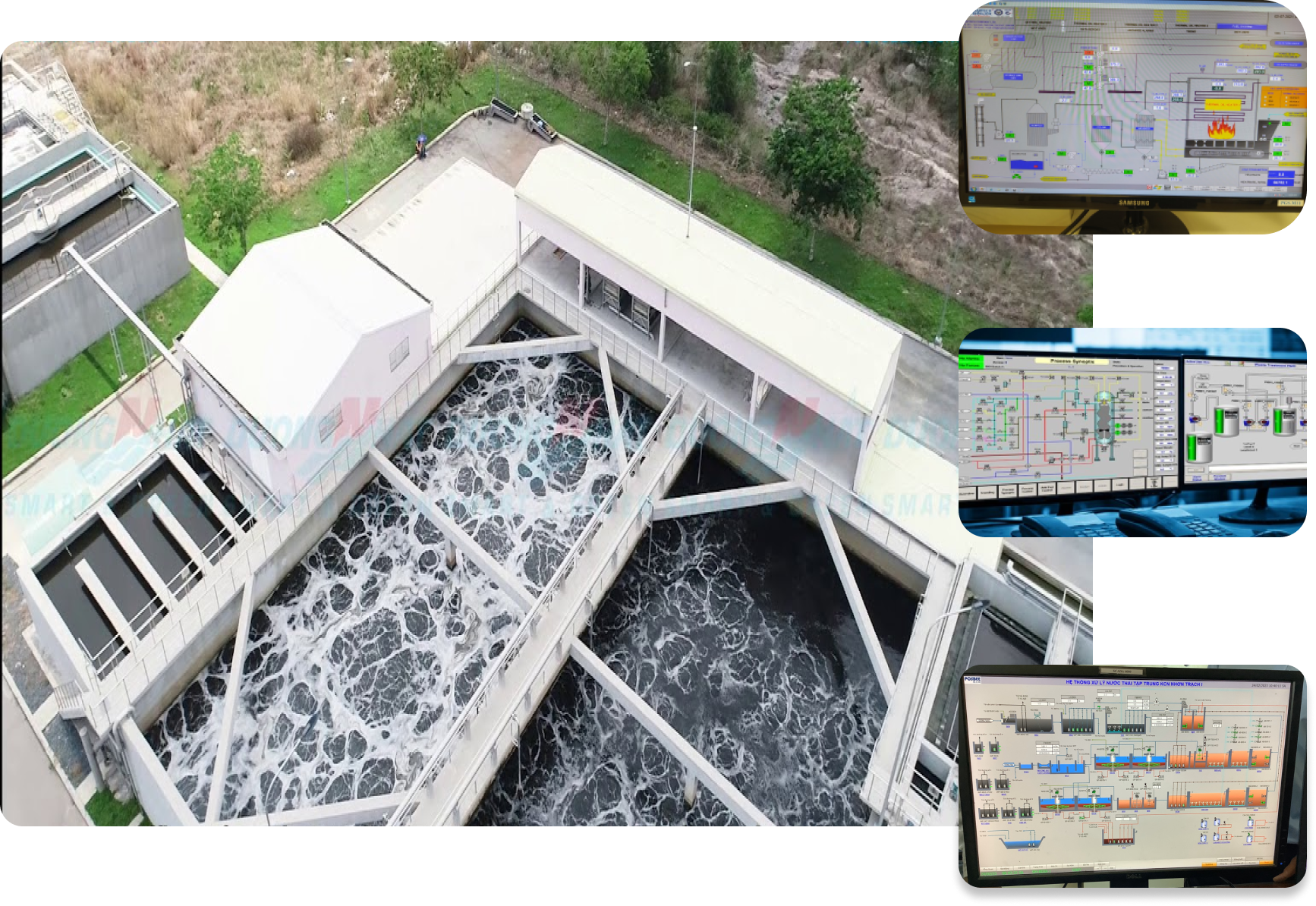
Particularly for automatic wastewater monitoring, data should be evaluated based on trends and actual operating conditions. This helps distinguish between an actual change in wastewater quality and a potential issue with the measurement equipment or sampling system.
What Should Businesses Know About QCVN 40:2025/BTNMT for Industrial Wastewater?
QCVN 40:2025/BTNMT is the National Technical Regulation on Industrial Wastewater, issued together with Circular No. 06/2025/TT-BTNMT dated 01/09/2025The regulation came into effect on September 1, 2025. It was developed by the Department of Environmental Pollution Control, submitted for approval by the Department of Science and Technology, appraised by the Ministry of Science and Technology, and promulgated by the Minister of Natural Resources and Environment under Circular No. 06/2025/TT-BTNMT dated February 28, 2025.
QCVN 40:2025/BTNMT specifies permissible limits for pollutant parameters in industrial wastewater discharged into receiving water bodies. The regulation applies to agencies, organizations, and individuals involved in the discharge of industrial wastewater into receiving water bodies.
However, businesses should note that not all facilities are subject to QCVN 40:2025/BTNMT at the same time..
Under the transitional provisions of Circular No. 06/2025/TT-BTNMT, certain facilities that had commenced operation or had environmental documentation meeting the specified conditions before the Circular took effect may continue applying the regulations corresponding to their type of production, business, or service and applicable local regulations until 31/12/2031.
Therefore, before determining whether a wastewater system is “exceeding the regulatory limit,” businesses need to correctly identify the applicable regulation and limits for their specific facility.
Common Causes of Wastewater Exceeding Regulatory Limits
When the wastewater monitoring system records a parameter that is trending upward or exceeding the applicable limit, businesses should investigate the causes by category.
Wastewater Treatment System Operating Unstably
This is the first group of potential causes that should be investigated. Biological, physicochemical, coagulation, flocculation, sedimentation, filtration, or disinfection treatment stages can be affected by pollutant loads, flow rate, pH, chemicals, sludge, and operating conditions. When a treatment stage does not operate according to its design or operates unstably, treated wastewater quality may change.
Changes in Wastewater Flow Rate
Flow rate is directly related to pollutant loads and the operating conditions of the treatment system. When the flow rate increases suddenly or exceeds the system's design treatment capacity, hydraulic retention time and treatment efficiency may be affected. This is also why flow measurement and wastewater monitoring data tracking need to be carried out in an integrated manner.
Changes in Raw Materials or Production Processes
A change in raw materials, chemicals used, or the production process can alter the composition of wastewater. Therefore, when abnormal wastewater conditions are detected, businesses should compare monitoring data with production logs to determine whether the change coincides with a change in production activities.
Improper Chemical Dosing
For treatment systems using chemicals, improper dosing can affect treatment efficiency. Businesses should inspect dosing pumps, chemical concentrations, pipelines, storage tanks, and operating conditions.
Issues with Monitoring Equipment or Sampling Systems
Not every abnormal value recorded by a wastewater monitoring station means that the entire wastewater treatment system is experiencing a failure. Measurement instruments, sensors, sampling lines, sampling pumps, filters, and auxiliary components should also be inspected. This is why regular wastewater monitoring station maintenance should be carried out with complete maintenance records.
What Should Businesses Do When Wastewater Exceeds Regulatory Limits?
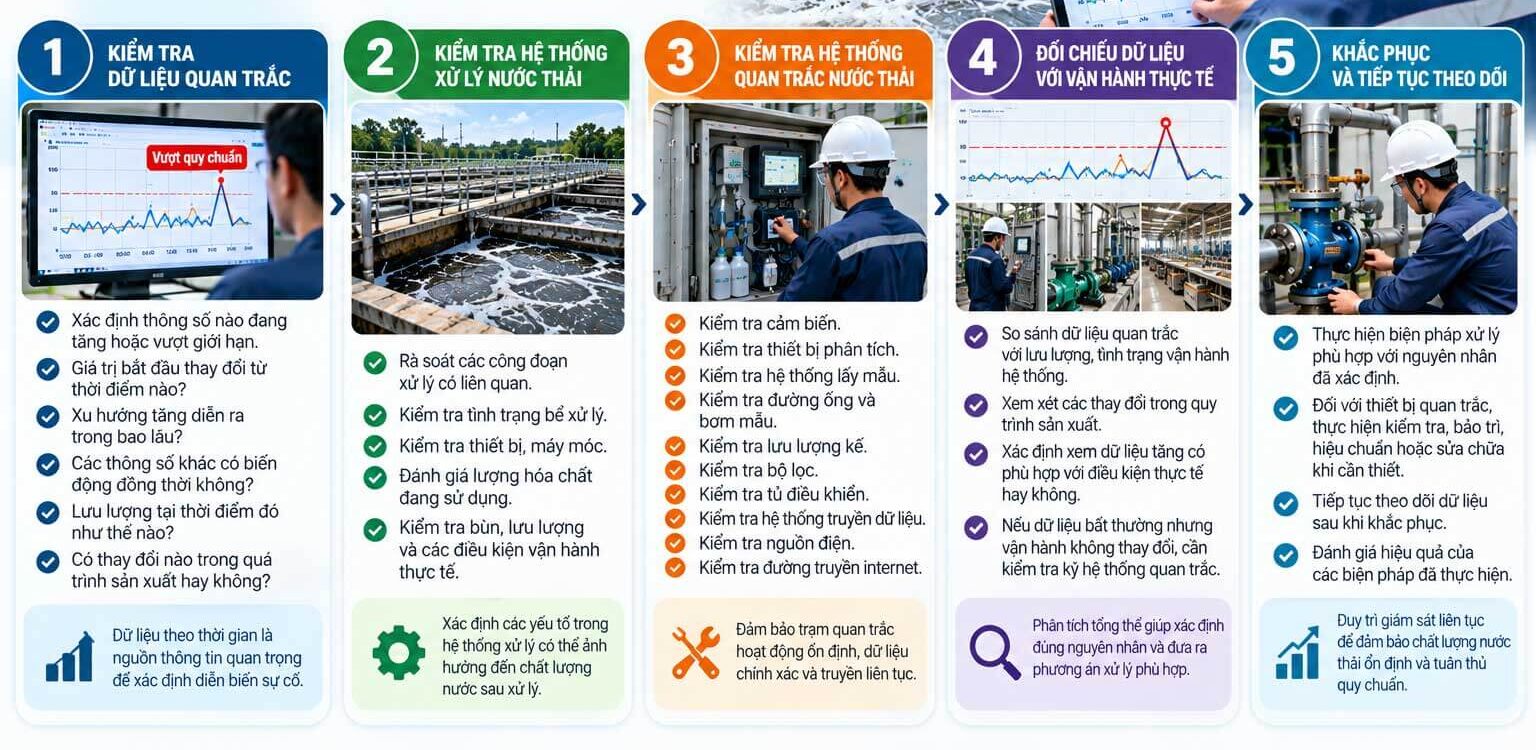
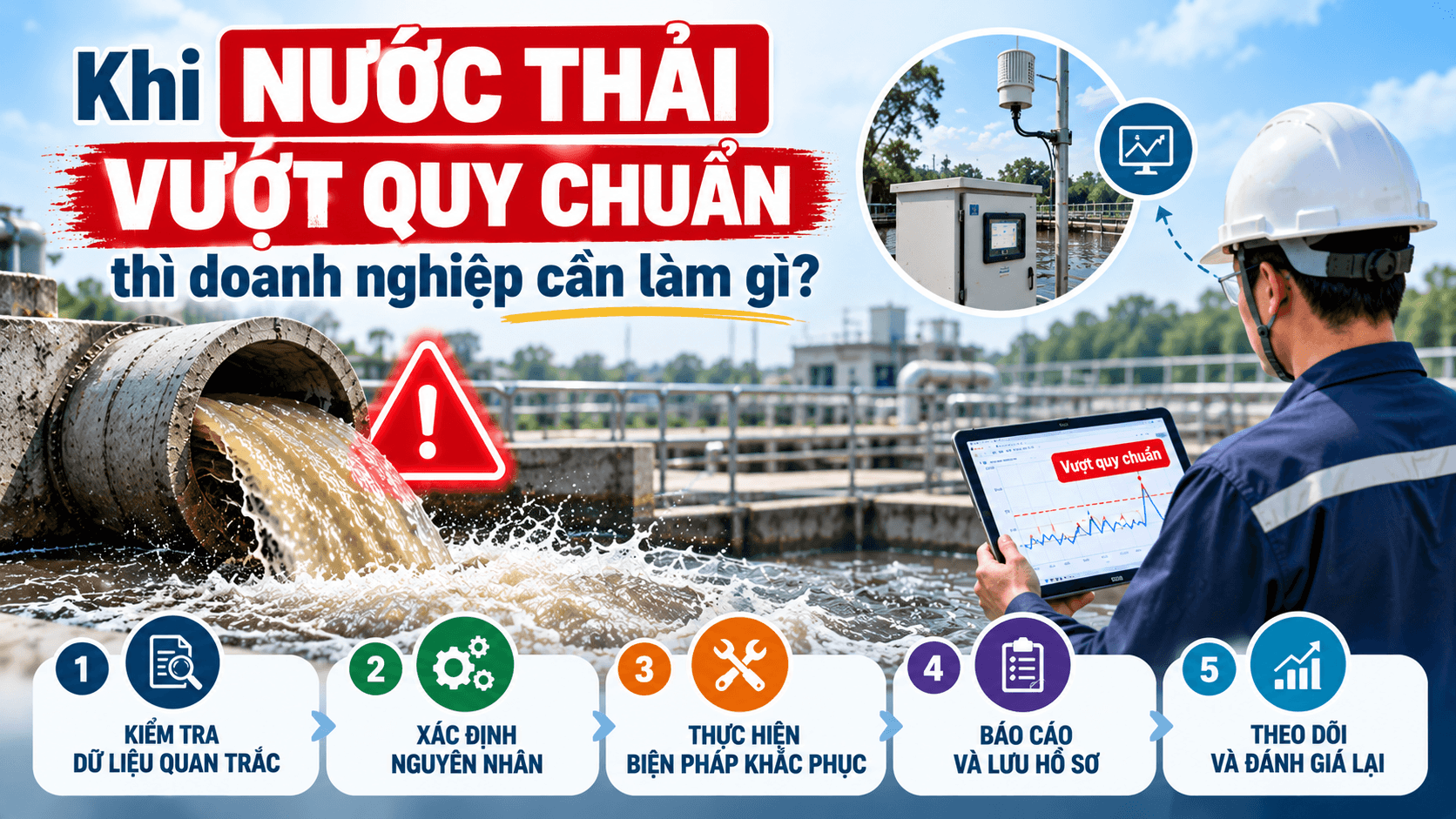
Step 1: Check Monitoring Data
First, businesses need to determine:
- Which parameter is increasing or exceeding the applicable limit?
- When did the value begin to change?
- How long has the upward trend continued?
- Are other parameters changing at the same time?
- What was the flow rate at that time?
- Were there any changes in the production process?
For an automatic wastewater monitoring, time-series data is an important source of information for determining the development of an incident.
Step 2: Inspect the Wastewater Treatment System
The inspection may include the condition of treatment tanks, equipment, chemicals, sludge, flow rate, and actual operating conditions.After identifying the abnormal parameter, businesses need to inspect the relevant treatment stages. The inspection may include the condition of treatment tanks, equipment, chemicals, sludge, flow rate, and actual operating conditions.
Step 3: Inspect the Wastewater Monitoring System
If the data shows signs of abnormality, the wastewater monitoring station should also be inspected.
The inspection may include:
- Sensors.
- Analyzers.
- Sampling system.
- Sampling lines and pumps.
- Flow meter.
- Filters.
- Control cabinet.
- Data transmission system.
- Power supply.
- Internet connection.
Step 4: Compare Data with Actual Operating Conditions
An effective monitoring system does more than provide a single measurement value; it also enables businesses to identify trends in wastewater quality. If an increase in the data occurs simultaneously with changes in flow rate or changes in the production process, businesses have additional information to investigate the cause. Conversely, if abnormal data patterns occur while operating conditions remain unchanged, the monitoring system should be inspected more thoroughly.
Step 5: Correct the Issue and Continue Monitoring
After identifying the cause, businesses should implement appropriate corrective measures and continue monitoring the data to evaluate the effectiveness of the corrective actions. For cases involving monitoring equipment, inspection, maintenance, calibration, or repair should be carried out in accordance with applicable technical requirements and procedures.
What Role Does an Automatic Wastewater Monitoring Station Play?
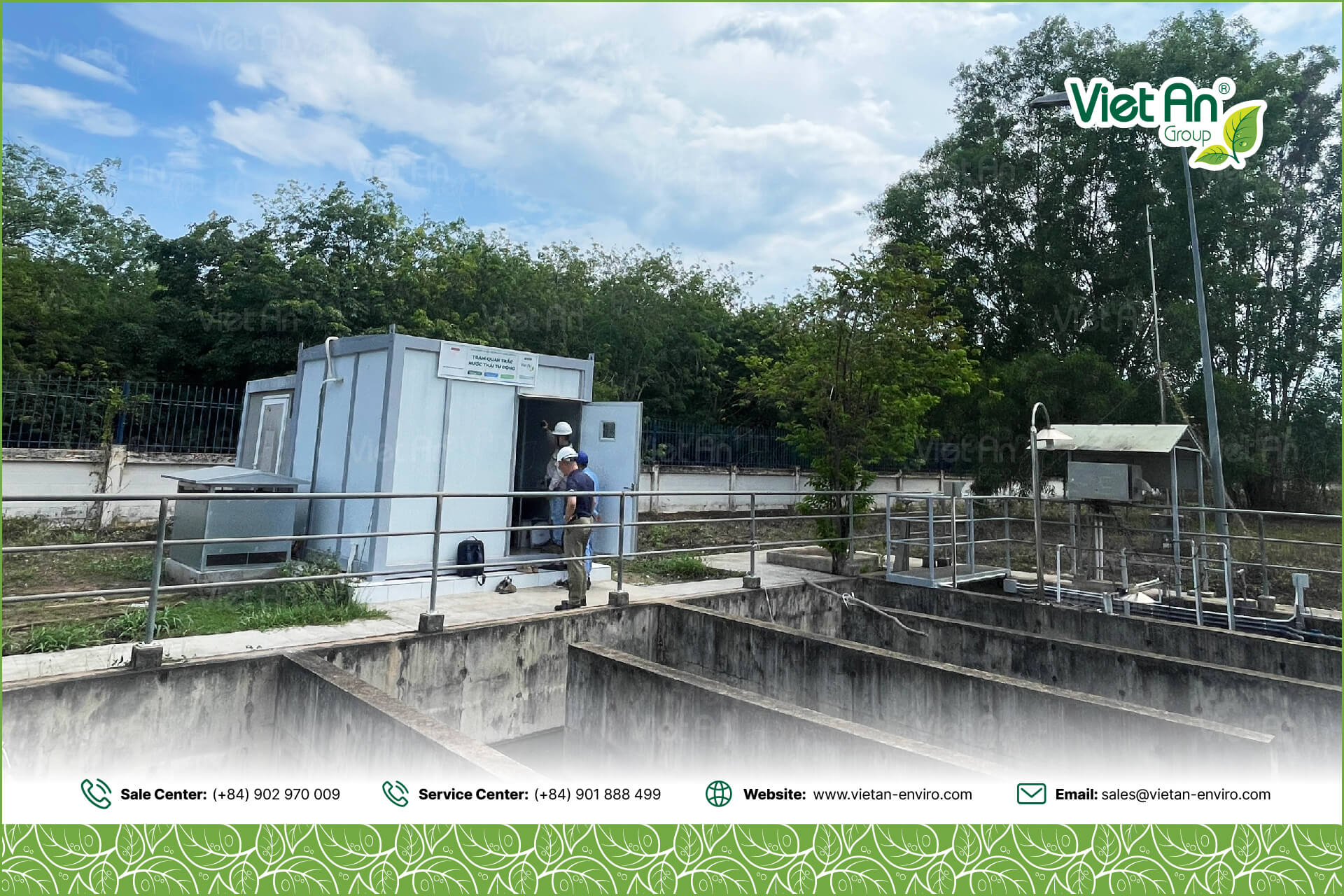
Automatic wastewater monitoring station is a system that enables businesses to continuously monitor parameters according to the system configuration and applicable requirements.
Unlike manual sampling performed at a specific point in time, an automatic system provides a time-series data record, enabling businesses to track changes in wastewater quality.
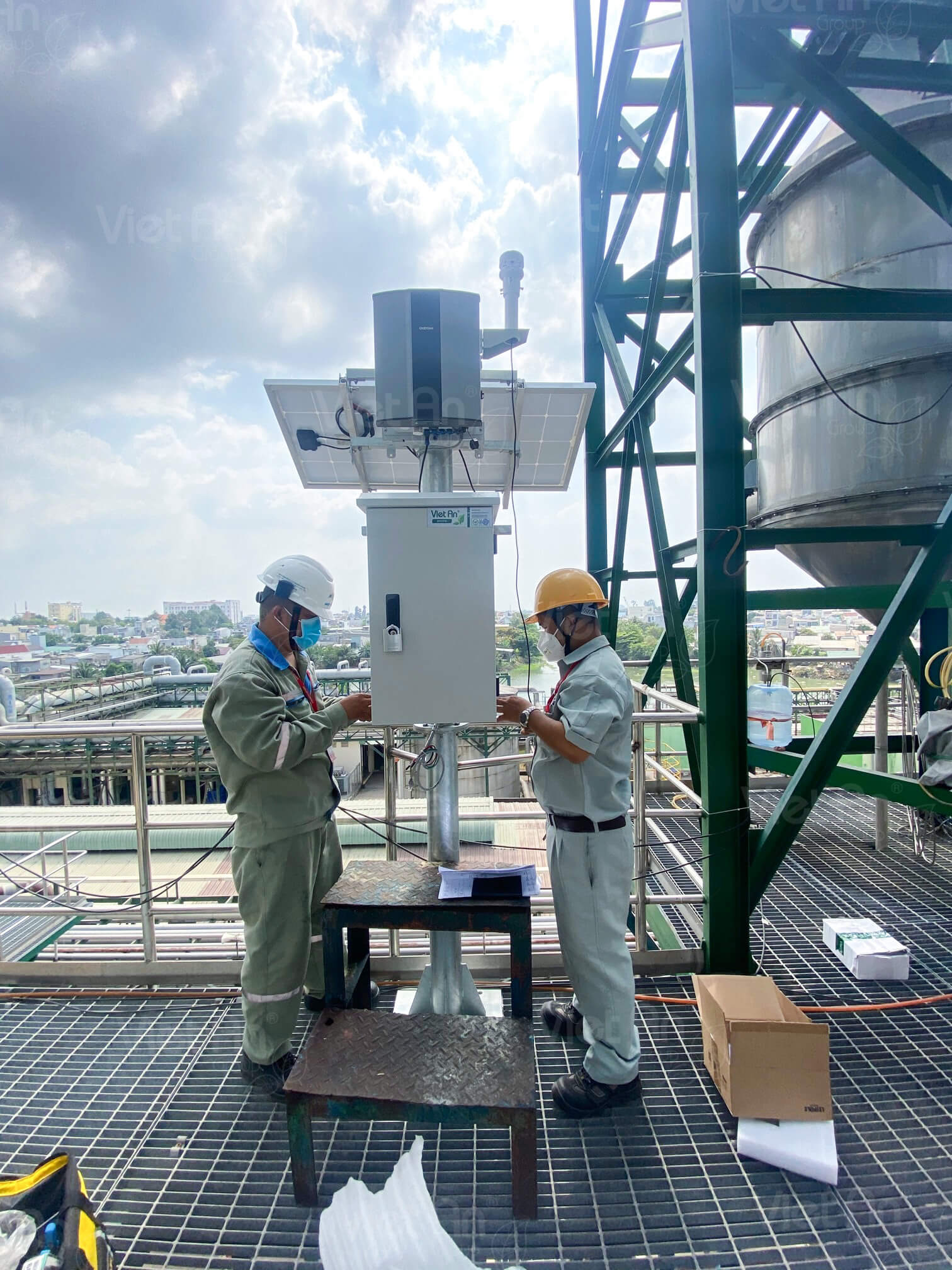
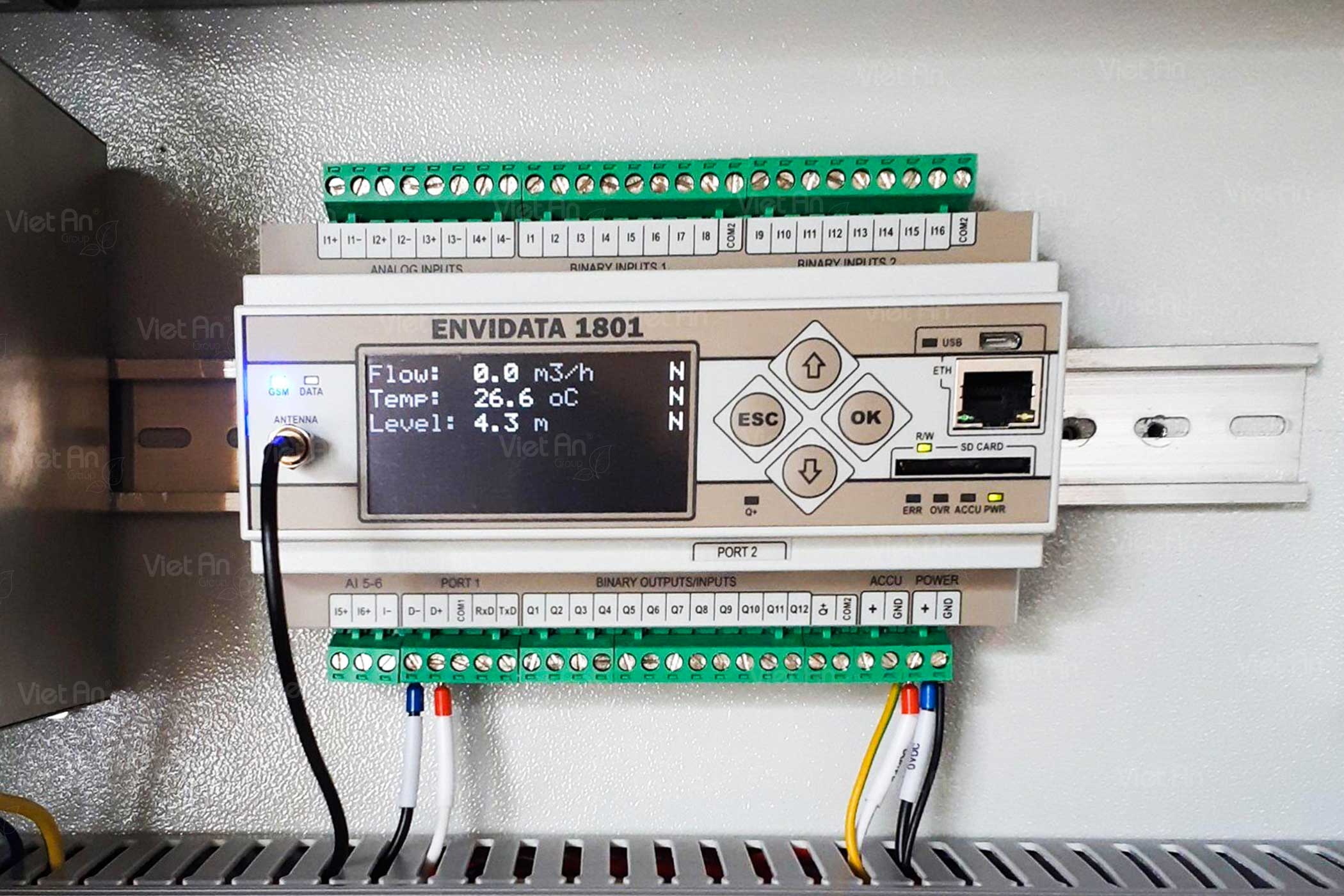
An automatic wastewater monitoring system typically consists of multiple components:
Sampling system → Measurement/analyzing equipment → Data processing → Data transmission → Receiving system → Monitoring
Therefore, the performance of the monitoring station does not depend solely on the analyzer but also on the entire system.
Automatic Wastewater Monitoring: More Than Just Installing Equipment
A common mistake is to consider automatic wastewater monitoring as a project that is completed once the equipment has been installed and connected. In reality, the system needs to be managed throughout its entire lifecycle.
In reality, the system needs to be managed throughout its entire lifecycle.
- Equipment: Measurement equipment must be selected according to the parameters, measurement range, and wastewater conditions.
- Sampling system: Measurement equipment must be selected according to the parameters, measurement range, and wastewater conditions.
- Data transmission: The system needs to maintain connectivity so that data can be transmitted as required.
- Maintenance: Equipment, sensors, and auxiliary components need to be inspected, cleaned, and maintained appropriately.
- Calibration and inspection: Businesses need to manage calibration, verification, and inspection schedules according to applicable requirements.
- Documentation: Operation, maintenance, equipment replacement records, and technical documentation should be properly managed and readily traceable when required
Why Is Regular Wastewater Monitoring Station Maintenance Necessary?
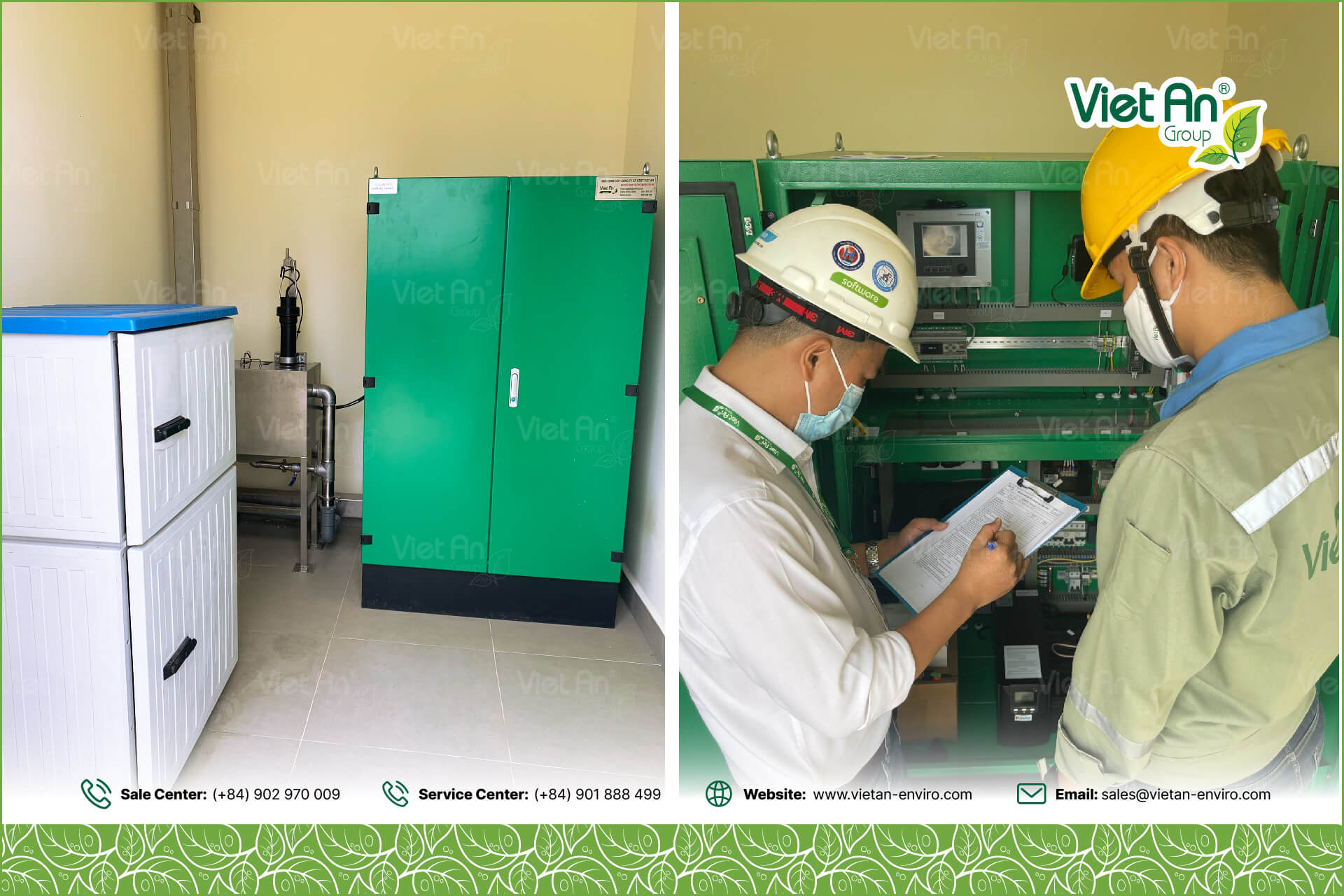
A wastewater monitoring station operates continuously in an environment that may contain various substances capable of affecting measurement equipment.
Without appropriate inspection and maintenance, the system may experience:
- Sensor fouling.
- Clogged sampling lines.
- Unstable sampling pump operation.
- Measurement deviations.
- Signal loss.
- Data transmission interruptions.
- Abnormal data patterns.
Regular maintenance helps businesses shift from a “repair after failure” approach to “check and prevent” approach..
In particular, where a business falls within the scope of a local regulation on the operation and management of automatic and continuous monitoring stations, equipment, data, and operational records should be maintained in accordance with the corresponding requirements.
When Should Businesses Inspect Their Wastewater Monitoring Station?
Businesses should pay particular attention when any of the following signs occur:
- Abnormally increasing data: A parameter showing a continuous upward trend should be investigated rather than waiting until a more serious issue occurs.
- Unusually stable data: A data series that remains almost unchanged for an extended period may also indicate that the system needs to be inspected.
- Prolonged zero values: These should be compared with actual operating conditions and equipment status.
- Data not correlated with flow rate: This is one of the abnormal data indicators identified in the operational management regulations being implemented by Viet An.
- Data transmission failure: Under the applicable operational management regulations, failure to transmit data to the Center for 1 consecutive hour is a condition for issuing an alert; failure to transmit data for 12 consecutive hour is a condition for issuing a reminder.
Viet An Wastewater Monitoring Station Operation and Maintenance Services
For businesses without a dedicated team to manage the entire system, wastewater monitoring station operation and maintenance services can help organize activities according to a consistent process
Viet An provides solutions to support businesses throughout the operation of automatic wastewater monitoring, including work packages tailored to the configuration and actual requirements of each monitoring station.
- System inspection: Assessing the condition of measurement equipment, sampling systems, data transmission systems, and related components.
- Maintenance and servicing: Performing scheduled maintenance activities to maintain stable system operation.
- Data monitoring: Supporting the detection of abnormal data patterns so that businesses can investigate potential causes at an early stage.
- Troubleshooting support: Coordinating inspections when the system experiences faults, signal loss, or abnormal data.
- Documentation management: Supporting businesses in managing technical records, maintenance records, servicing records, and other system-related documentation.
Viet An – Automatic Wastewater Monitoring Solutions for Businesses
With experience in deploying more than 2,000 monitoring stations , according to information provided by the company, Viet An provides environmental monitoring and industrial measurement solutions, including automatic wastewater monitoring systems. Solutions are developed according to the actual requirements of each business, from equipment selection, system design, installation, and data connectivity to operation, maintenance, and technical support.
For businesses operating a wastewater monitoring station, having a technical partner throughout the system lifecycle can help make inspection, maintenance, and troubleshooting activities more proactive and structured.
Conclusion
Wastewater exceeding regulatory limits should not be addressed simply by waiting for periodic sampling results. Businesses should proactively monitor wastewater quality, control the treatment system, and maintain the automated wastewater monitoring stations in stable operating condition. When abnormal data is detected, businesses should simultaneously inspect wastewater quality – the treatment system – the monitoring system – and data transmission and reception to identify the cause before determining the appropriate corrective action.
Investing in automatic wastewater monitoring is therefore not only a way to meet environmental management requirements but also a tool that enables businesses to take a more proactive approach to wastewater treatment process control.
Việt An – Reliable Environment Monitoring & Process Solutions
Providing wastewater monitoring stations, automatic wastewater monitoring systems, and operation and maintenance services for environmental monitoring systems to businesses.
Contact Viet An for consultation on the solution best suited to your treatment system and wastewater source.
Hotline: (+84) 902 970 009 | Email: sales@vietan-enviro.com




 Vietnamese
  English